Slopes That Manage Water and Improve Usability
Land Grading in Benton, TN & surrounding counties for properties requiring improved drainage, construction readiness, and erosion control
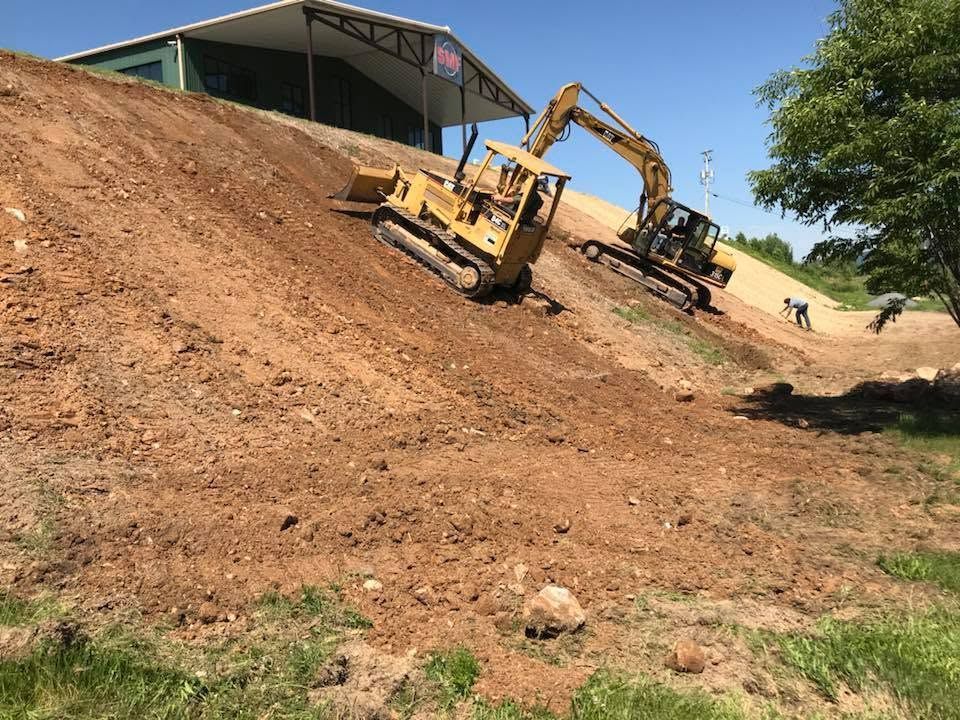
West Tennessee terrain naturally sheds water during heavy rain, but properties without intentional grading develop low spots where water collects, eroded channels where runoff concentrates, and uneven surfaces that limit usability. Costenbader Excavating and Paving provides rough and finish grading for residential, commercial, and agricultural properties throughout Benton, TN & surrounding counties.
Grading reshapes land by cutting high areas and filling depressions to create consistent slopes that move water toward drainage outlets without causing erosion or standing water.
The grading process involves analyzing existing terrain, identifying problem drainage areas, and using GPS-guided or laser-controlled equipment to establish slopes that match intended use. Rough grading prepares construction sites and large land areas, while finish grading creates smooth surfaces ready for landscaping, paving, or seeding.
Schedule grading before beginning landscaping or construction to establish proper drainage from the start.
The Difference Between Rough and Finish Grading
Rough grading establishes major elevation changes and primary drainage paths by moving larger volumes of earth to create building pads, access roads, and water flow corridors. Finish grading refines surfaces to precise elevations, smoothing out irregularities and fine-tuning slopes so that water moves predictably without forming ruts or channels during storms.
After grading is complete, your property drains consistently during rain events without pooling in unintended areas, and surfaces are smooth enough for equipment operation or landscaping installation. Driveways and access routes remain passable during wet weather instead of developing muddy ruts. Properties graded with proper slope design experience less erosion because water velocity stays controlled across longer flow paths.
Grading solutions are customized to each property's terrain and intended use, whether preparing agricultural fields for equipment access, improving drainage around existing buildings, or readying land for construction. Final grades account for how soil type and vegetation affect runoff speed and infiltration rates.
What Property Owners Usually Ask
Grading projects involve decisions about slope, drainage, and long-term site functionality. These answers clarify what to consider before work begins.
What slope percentage is ideal for managing drainage without causing erosion?
Slopes between two and five percent typically move water effectively while preventing excessive runoff velocity that erodes soil, though steeper grades may be necessary depending on site constraints.
How does grading affect existing trees or landscaping?
Grading plans account for protecting root zones when possible, but significant elevation changes near mature trees often damage roots and compromise tree health.
What happens to topsoil during grading operations?
Topsoil is typically stripped and stockpiled before rough grading begins, then redistributed across finish-graded areas to support vegetation establishment.
When should grading be completed relative to other site work?
Rough grading happens early in site development before utilities and construction, while finish grading occurs after major disturbances are complete but before landscaping or seeding.
How is grading designed to prevent future erosion in areas with heavy rainfall?
Proper grading includes establishing gentle slopes, avoiding long uninterrupted flow paths, and directing runoff toward stable outlets rather than allowing concentrated flow that carves channels.
Costenbader Excavating and Paving delivers efficient grading with careful attention to slope consistency and water management. Arrange a property evaluation to identify drainage concerns and discuss grading options tailored to your land's topography.