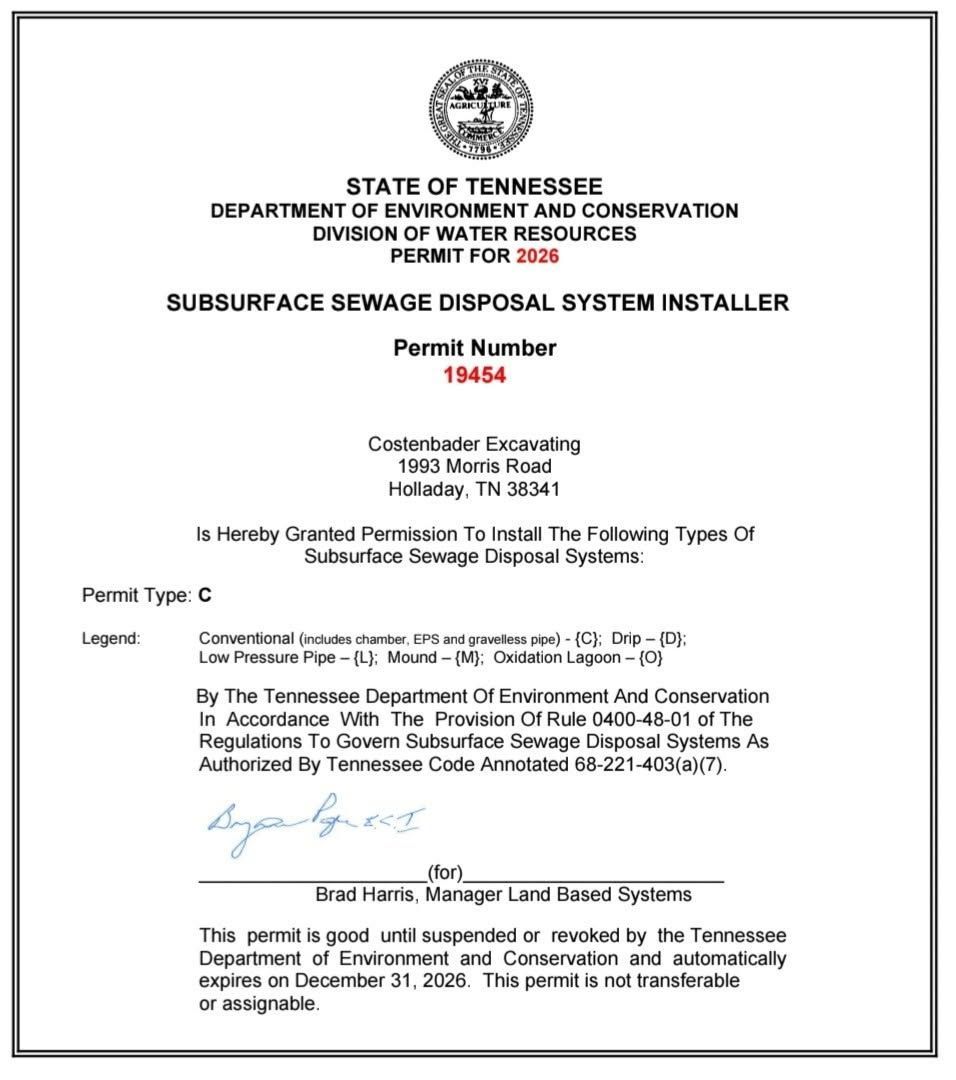
Systems Installed to Last
Septic Installs in Benton, TN & surrounding counties for new residential construction and properties requiring wastewater treatment systems
A septic system installed correctly performs quietly for decades without surfacing sewage or requiring premature repairs. Costenbader Excavating and Paving excavates, prepares sites, and installs septic systems for new home construction and qualifying rural properties throughout Benton, TN & surrounding counties, working to project requirements and applicable regulations that govern tank placement, drain field sizing, and setback distances.
Homeowners building in areas without municipal sewer access schedule septic installation early in construction to coordinate with foundation work, utility connections, and final grading.
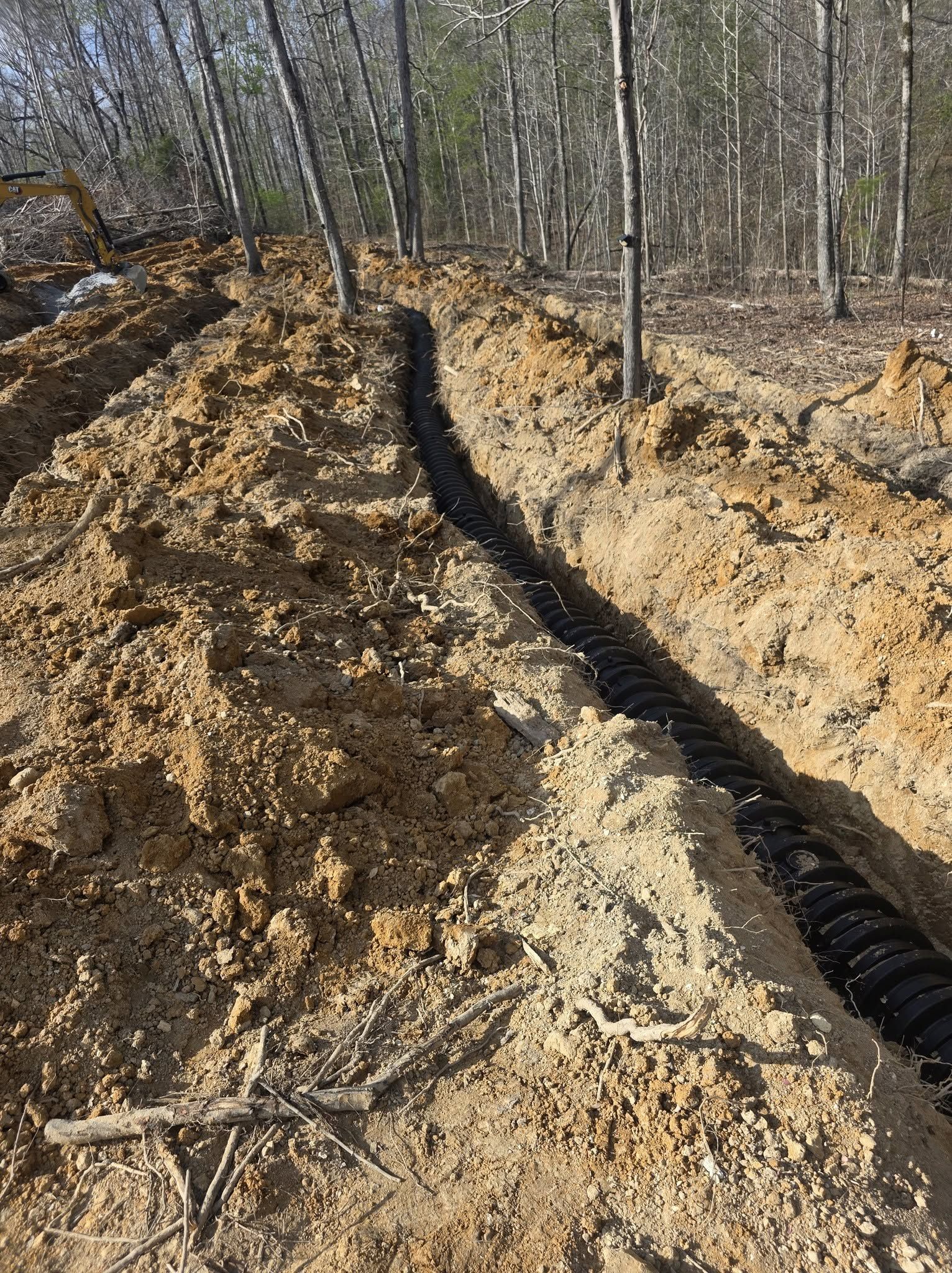
Installation involves excavating to proper depth for tank placement, preparing drain field trenches with specified slope and spacing, installing distribution piping and stone aggregate, and backfilling in lifts that prevent settling around tanks and lines. The work requires careful planning to account for soil conditions, water table depth, and site topography that affect how the system disperses wastewater.
Contact the team to discuss septic installation requirements and schedule site evaluation before your project begins.
Why Proper Installation Works for Long-Term Performance
Septic installation starts with verifying that soil percolation rates support drain field function, then excavating tank locations and drain field trenches to depths and dimensions specified in approved septic plans. Tanks are set level and connected to inlet and outlet piping, distribution lines are laid with correct slope to ensure even wastewater flow, and stone aggregate is placed around piping to filter effluent before it reaches surrounding soil. Inspectors verify installation at multiple stages before backfilling is completed.
After installation, you see access risers extending to grade for future tank pumping, a level yard surface over the drain field that allows grass to grow without settling, and a system that operates without odors or surfacing sewage. Reliable workmanship during installation prevents the line breaks, tank shifting, and drain field failures that occur when excavation is rushed or backfill is not compacted properly.
Septic systems also require coordination with homeowners, builders, and inspectors to ensure tank size matches household occupancy, drain field placement avoids wells and property lines, and installation timing aligns with other construction phases. Projects in rural areas often involve longer trenching for distribution lines and additional site evaluation to address sloped terrain or seasonal water table fluctuations.
Common Questions About This Service
Property owners preparing for septic installation often ask about system sizing, soil requirements, and inspection processes.
What determines septic system size?
System size is based on household occupancy and daily wastewater volume, with tank capacity and drain field area specified in plans approved by local health departments before installation begins.
How does soil type affect septic installation?
Soil type determines percolation rates that control how quickly wastewater is absorbed, and sites with poor drainage may require alternate system designs, larger drain fields, or additional treatment components.
When are inspections required during installation?
Inspections typically occur after tank placement, before drain field backfilling, and after final grading to verify that installation meets code requirements and approved plans.
Why is drain field placement important?
Drain field placement must maintain setback distances from wells, property lines, and buildings, and must be located in areas with suitable soil and topography that allow effluent to disperse without surfacing.
What coordination is required with builders?
Coordination includes scheduling installation to avoid conflicts with foundation work, ensuring access for excavation equipment, verifying utility locations, and timing inspections to keep construction on schedule in Holladay.
Costenbader Excavating and Paving handles septic installations with attention to detail from excavation through final inspection, coordinating with homeowners and builders throughout the process. Reach out to review septic installation options and site-specific requirements for your property.
Septic Certification