Properties Ready for What Comes Next
Land Clearing in Benton, TN & surrounding counties for construction sites requiring accessible, usable ground conditions
Clearing land without removing more than necessary requires operators who understand which vegetation to cut and what to leave standing. Property owners throughout West Tennessee need clearing when preparing sites for home construction, adding outbuildings, or improving access to undeveloped acreage.
Costenbader Excavating and Paving removes brush, small trees, and undergrowth while preserving boundary trees, specimen plants, and areas designated to remain undisturbed.
The work involves cutting vegetation at ground level, removing root masses that interfere with grading or foundation work, and clearing debris off-site or into burn piles depending on project requirements and local regulations. Selective clearing improves property usability without stripping the entire site, which helps control erosion and maintains natural features that add value.
Schedule a property evaluation to identify clearing boundaries and discuss site preparation goals before construction begins.
What You Notice Once Clearing Is Finished
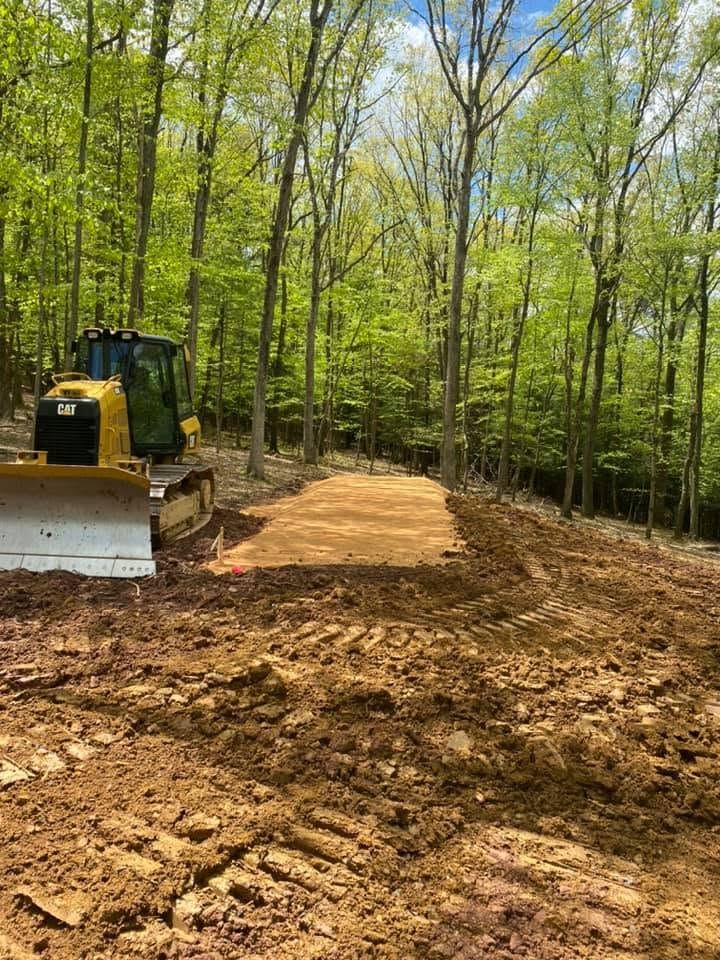
Land clearing starts with marking boundaries and identifying features to protect, then progressing through the site with equipment sized for the vegetation density and terrain conditions. Operators use brush cutters or excavators with clearing attachments to remove growth efficiently while avoiding damage to surrounding trees, and debris is sorted for disposal, mulching, or stacking based on what the property owner prefers.
After clearing, you see open ground accessible to vehicles and equipment, sightlines that reveal property boundaries and terrain features, and a workable surface ready for grading or construction activity. Selective clearing leaves mature trees standing where planned, maintains natural drainage patterns, and removes the dense undergrowth that limits access and visibility.
Clearing also includes managing stumps and root systems that interfere with building footprints or utility installations, and addressing invasive species that regenerate quickly if not removed properly. Rural properties throughout surrounding communities often require site-specific approaches based on vegetation type, soil moisture, and how the land will be used after construction.
Common Questions About This Service
Property owners preparing for development projects often ask about selective clearing methods, debris handling, and site restoration practices.
What does selective land clearing involve?
Selective clearing removes targeted vegetation while preserving trees and plants you want to keep, using marked boundaries and careful equipment operation to avoid damaging areas designated to remain undisturbed.
How is debris managed after clearing?
Debris can be hauled off-site, chipped into mulch for spreading on cleared areas, or stacked into burn piles depending on local regulations, project budgets, and what you prefer for the property.
When should clearing be completed before construction?
Clearing should be finished early enough to allow the site to dry after equipment traffic and to give time for any required erosion control measures to be installed before grading or foundation work starts.
Why does equipment size matter for clearing projects?
Equipment must be large enough to handle dense vegetation efficiently but small enough to maneuver without damaging trees you want to save, which is why operators assess site conditions in Holladay before selecting machinery.
What happens to stumps during land clearing?
Stumps are either ground below grade, excavated and removed, or left in place if they sit outside building footprints and grading areas, depending on how the cleared land will be developed.
Costenbader Excavating and Paving operates equipment safely and manages sites responsibly, with crews experienced in preparing rural properties for residential and commercial development. Discuss your clearing requirements and site conditions to receive a tailored estimate for your project.