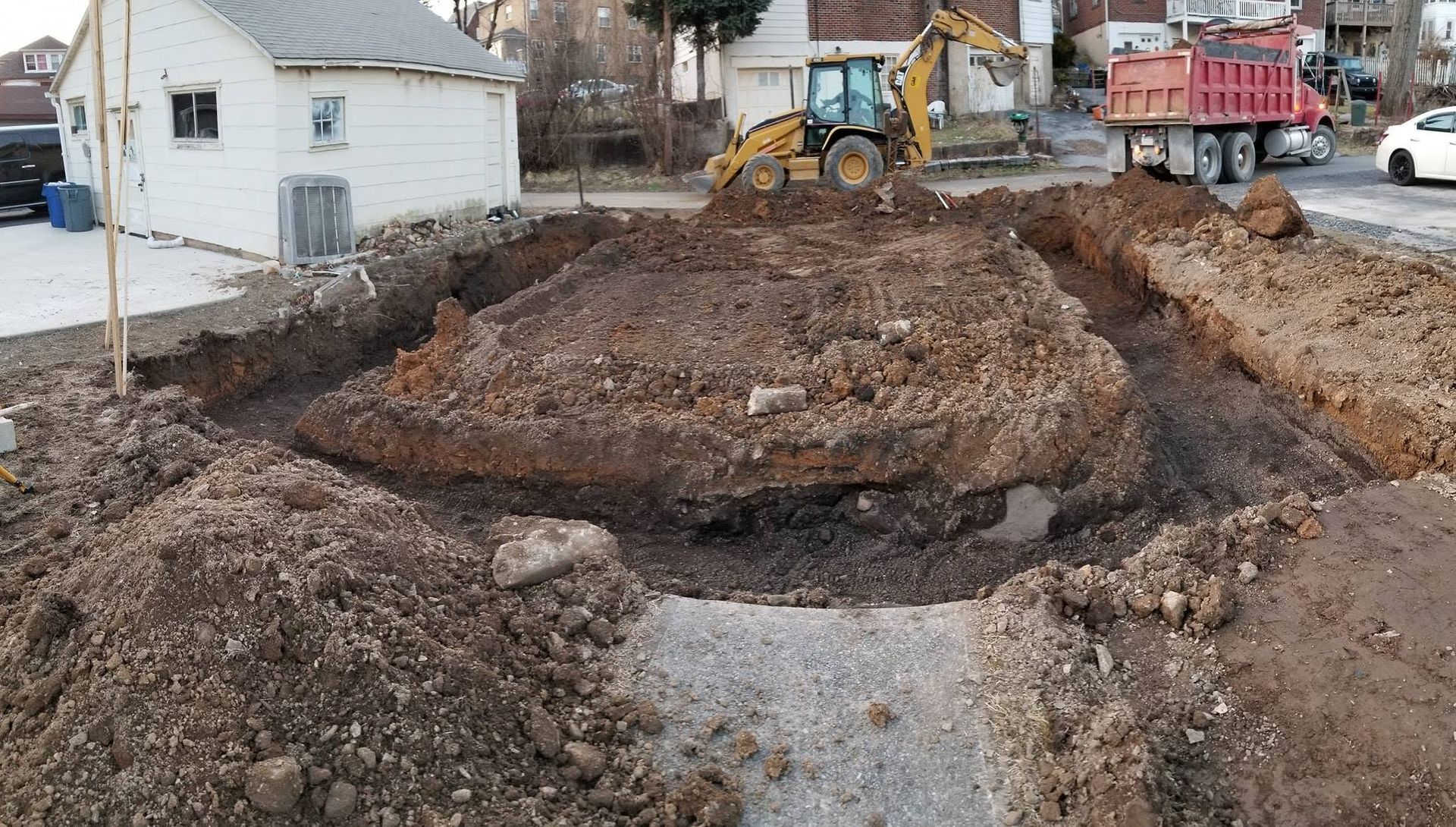

Ground Conditions Built for Lasting Construction
Site Preparation in Benton, TN & surrounding counties for properties requiring clearing, grading, and stable building areas before construction
Building on unprepared ground leads to settlement cracks, drainage failures, and costly structural repairs within the first few years. Costenbader Excavating and Paving provides complete site preparation for homes, businesses, and construction projects throughout Benton, TN & surrounding counties. Proper preparation involves clearing vegetation, removing topsoil layers that compress under load, excavating to required depths, and compacting subgrade materials to create stable support for foundations and slabs.
Site preparation transforms raw land into construction-ready building areas by establishing correct elevations, removing organic material, and creating drainage grades that move water away from structures. The process includes coordination with builders and developers to verify that finish grades match architectural plans and utility routing.
Request a consultation to review clearing requirements and soil conditions specific to your property.
How Site Preparation Addresses Long-Term Structural Issues
Site preparation begins with clearing trees, stumps, and brush from the building footprint, followed by stripping and stockpiling topsoil for later use in landscaping areas. Subgrade excavation removes unsuitable material, and controlled compaction in measured lifts creates a firm base that won't settle unevenly once building loads are applied.
After preparation is complete, the building area sits at consistent elevation with no soft spots, organic debris, or grade depressions. Contractors can lay foundations immediately without waiting for additional compaction or fill corrections. Water flows predictably toward drainage routes instead of pooling near the building perimeter where it would threaten foundation integrity.
Preparation also includes establishing access routes for concrete trucks and material deliveries, minimizing the risk of rutting finished grades during construction. Properties prepared with attention to drainage and compaction standards experience fewer callbacks for settling issues after occupancy.
Answers to Frequent Service Questions
Site preparation decisions affect construction quality for decades. These answers clarify what happens during the preparation process and why certain steps matter.
What site conditions require additional preparation steps beyond standard clearing and grading?
Properties with high water tables, expansive clay soils, or steep slopes may need underdrains, geotextile reinforcement, or engineered fill to achieve stable building conditions.
How is finished grade elevation determined for a building site?
Grade elevation accounts for drainage away from the structure, flood risk, utility depth requirements, and the relationship between finished floor height and surrounding terrain.
What happens if preparation reveals unsuitable soil that wasn't anticipated?
Unsuitable material is excavated deeper and replaced with engineered fill, or the foundation design is adjusted to account for soil conditions discovered during preparation.
When should site preparation occur relative to utility installation?
Preparation typically happens before utility trenching so that final grades aren't disturbed by later excavation, though rough grading sometimes precedes utilities depending on project phasing.
How does site preparation in West Tennessee differ from other regions?
The clay-rich soils common around West TN require careful moisture management during compaction, and preparation schedules often avoid wet seasons when equipment causes excessive disturbance.
Costenbader Excavating and Paving works with builders and property owners throughout every stage of preparation to avoid site issues that delay construction. Schedule an estimate to discuss your project timeline and soil characteristics before site work begins.